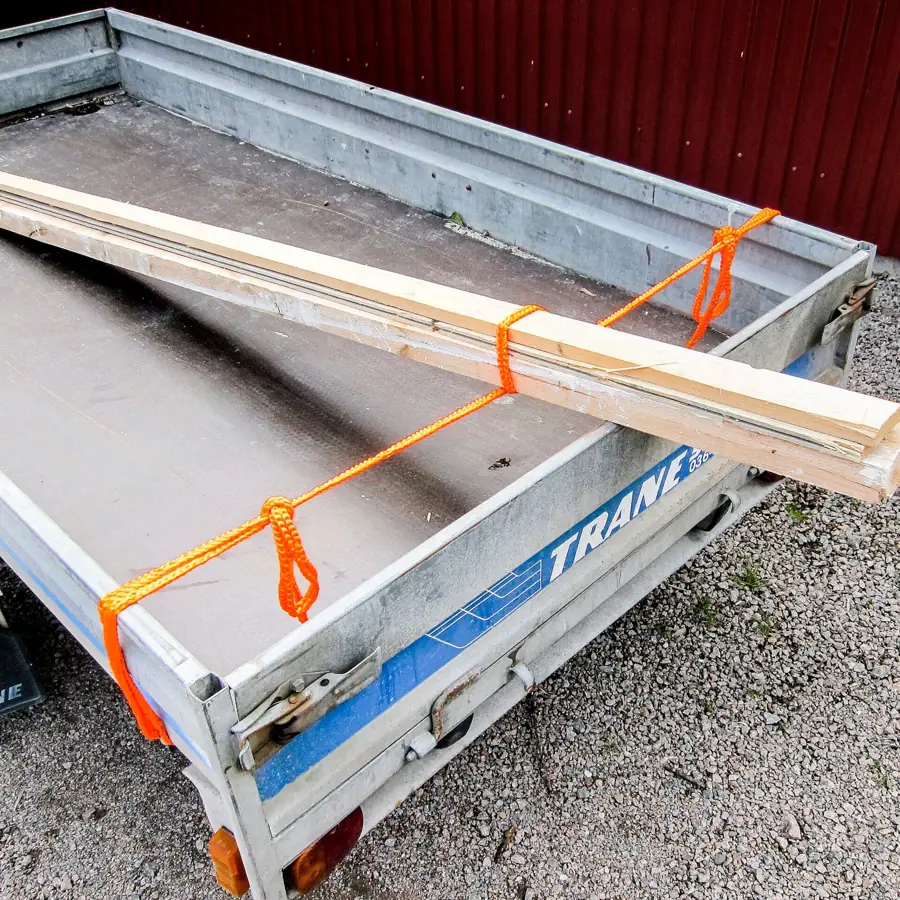
Tie it down. Without straps.
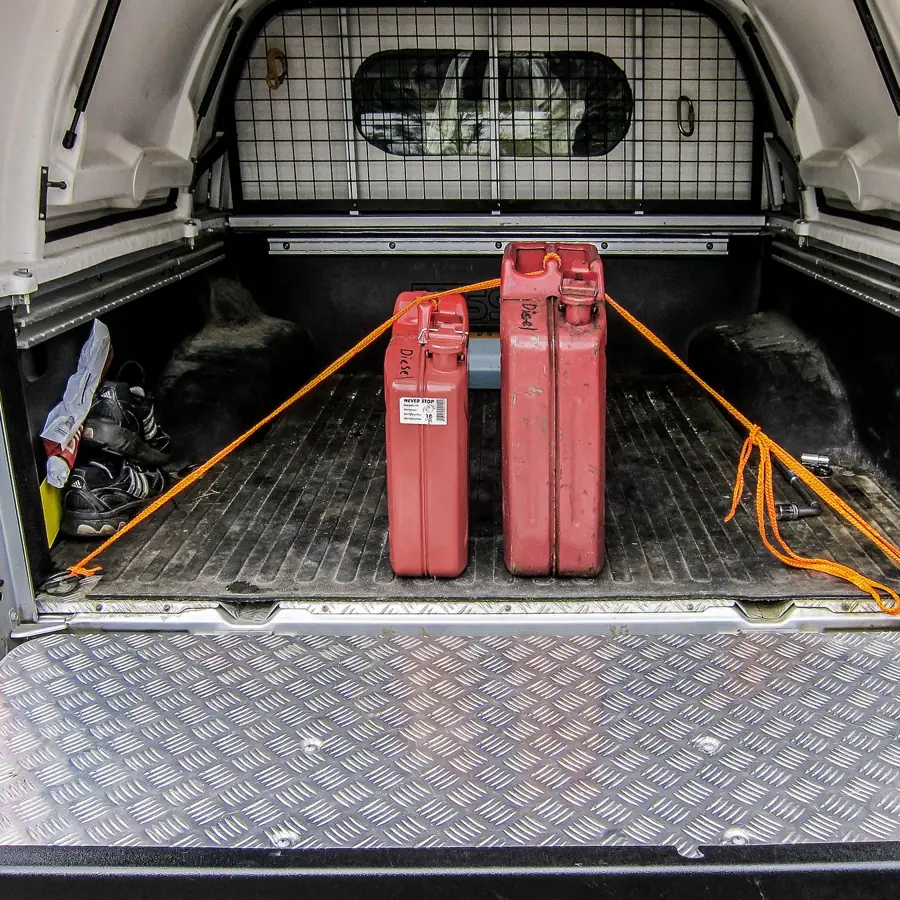
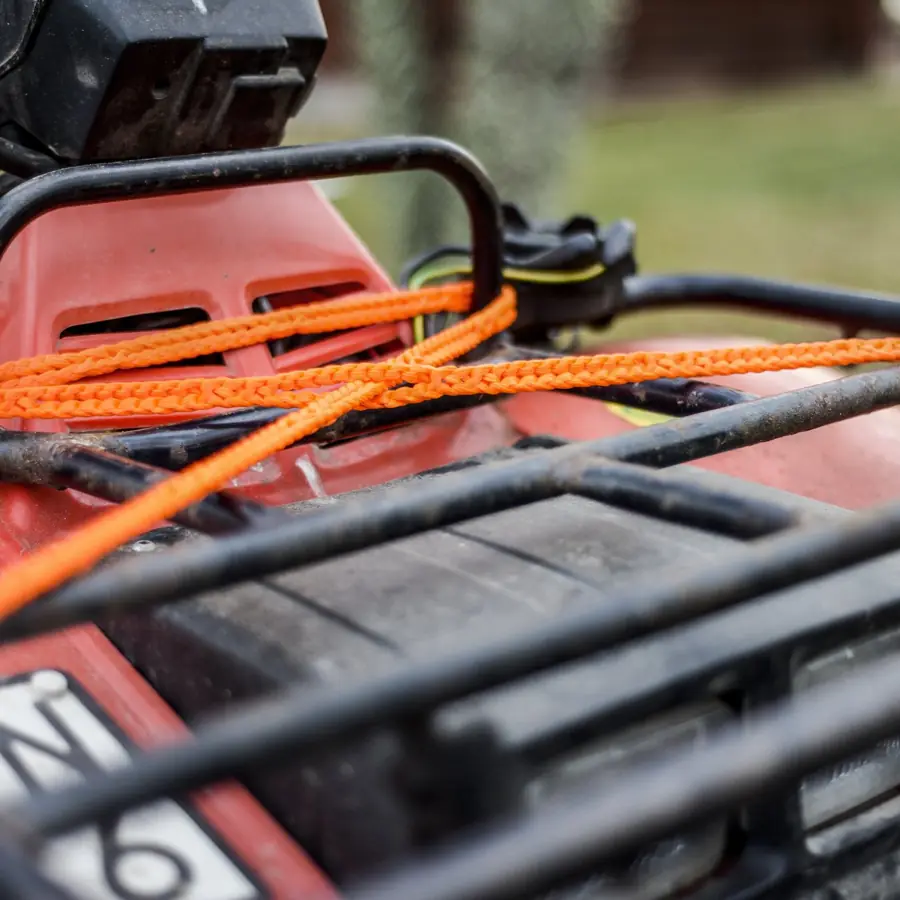
Over the load, around the rail, through a loop and pull. The securing lock holds the timber on the trailer, the jerry cans on the pickup and the canoe on the roof, and the built-in stretch keeps it tight as the load settles.
Tie it down with a rope that stays tight
A ratchet strap is fast until the hook slips off, the strap twists, or the ratchet is frozen shut. RunLock is a rope: it goes anywhere a rope goes, around anything, and it locks on itself. The securing lock is made for exactly this. Run the rope over the load, around the anchor and back through one of its own loops, pull tight, and the rope holds itself.
The stretch is the trick. Because you lock the rope slightly stretched, it keeps pulling as the load settles on the road, instead of going slack the way a strap does. And because polyester is soft, the rope does not mark a canoe, a bike frame or a varnished plank.
For a load with rings or hooks, use the quick loop with fixed release. For a carabiner, a fixed loop. To reach around a wide load, join two ropes loop to loop.
Which size
- No 8The all-round size for trailers, roof racks and pickups
- No 12Heavier loads and longer runs
- No 4Light gear, tarps and tents
See it done.
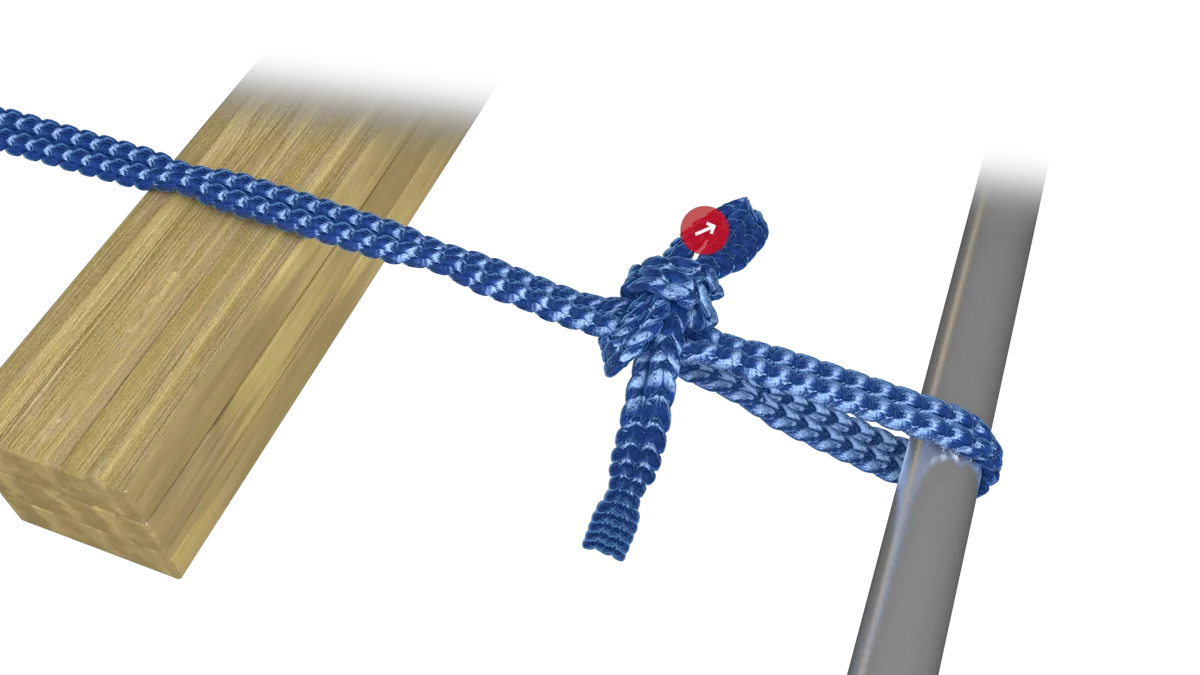 Securing lock
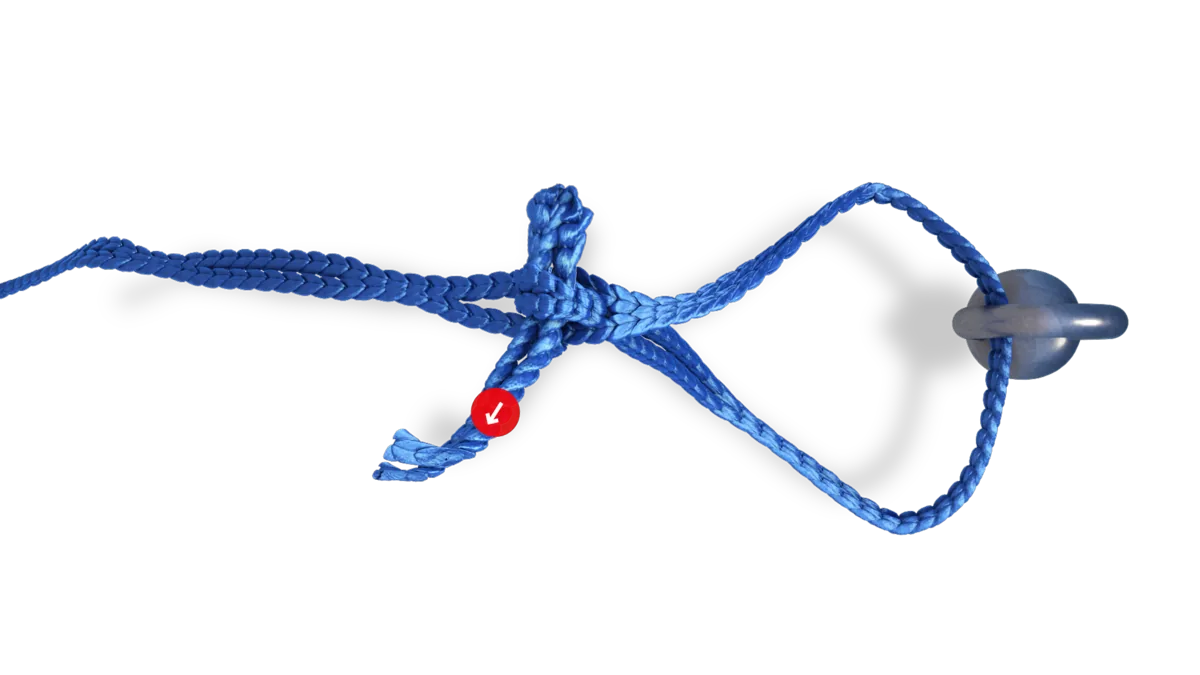 Quick loop, fixed release